

I’ve been thinking a lot about the Neo-Luddism movement recently, which I feel is ripe for a resurgence in light of the current fashionable corporate trend to replace workers with ‘free’ AI. The word Luddite gets thrown around a lot, and more often than not, incorrectly. People often tend to assign some sort of absolute anti-technology bent to the Luddites when what they were really up-in-arms about were the social and cultural changes that the new technologies brought directly to their livelihoods. Luddites were skilled workers who were watching their specific crafts get devalued by a specific technology deployed by specific actors for specific economic reasons. In this regard, I think that what we’re seeing with regards to LLM is nearly identical, people are complaining about LLM but what they’re really upset about are the social shifts that come with them, particularly those pertaining to employment.
There’s another aspect of modern Neo-luddism that is a bit more detached from the grievances of the original movement and without the notion of technology pushing us towards career obsolescence. Without this aspect of labor to underpin it, instead this movement asks a broader question about the direction the information age has taken over the last twenty years. What impact is the attention economy and the various software tools built to prop it up having on our innate humanity? Again, I think the arguments behind this are less about technology being ‘bad’, and more about how we choose to use these technologies.
This is where I find myself. The desire to back away from the direction technology has been moving in, to pivot away from the dopamine-injection-system that the modern smartphone has become, to move towards something more intentional. I feel a strong pull towards single purpose devices, specifically tied to one or two aspects of the multitude of features that a modern phone encapsulates. Camera, watch, notebook, to-do list, television, instant message app, music player, etc. The value-add that stand-alone replacements have over the phone is the notion that they require at least some small amount of deliberate interaction.
Friction as a feature is how I’ve come to understand my interaction with the devices used to substitute for these various smartphone features. You have to want to listen to music with these devices, and you have to think about what music it is exactly that you want to listen to. You have to not only want to take a picture, but you have to actually pause for a moment and give some consideration to framing, exposure, and other settings that make for a good picture. You have to take the time to sit down, open your notebook, leaf to the correct page, and think about what you want to write. Indeed, though I would probably be reluctant to jump all the way back to film photography, there’s something to be said for the notion of not wanting to waste or mess up a piece of paper or a shot of film. I’m not just gravitating to these features because they are there, but rather, I am turning to this device / solution specifically with the desire to use it for its intended purpose. I want to do this thing, so I turn to the tangible object(s) designed to do this thing.
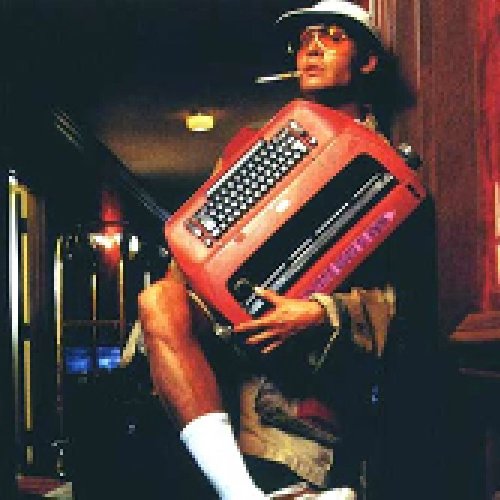
As with my thoughts on film, I think there’s probably a healthy way to step back without going completely overboard. I don’t think you need a typewriter, but instead a laptop that you dedicate to writing; keeping it divorced from social media and all of the other distractions that make their way onto a modern computer. No need to jump back to paper books, but perhaps an eInk reader of some sort. I can’t get rid of my phone. I need it for TFA apps, maps, and messaging while mobile. I think, at the same time, I can probably remove about half the apps on it. In an ideal world, I’d even remove the browser, instead opting to make surfing the web another intentional act to be saved for the big screen. By minimizing what I do on the phone and instead opting to use these single-use devices, I can take advantage of that friction to build a habit of intentionality.
But why do we care about intentionality? Steve Jobs once described his vision of the personal computer: a bicycle of the mind capable of enhancing the efficiency of human thought the same way in which a bicycle enhances the efficiency of human-powered locomotion. If the computer instead removes any friction which causes us to have to choose, it has stopped ‘enhancing’ our efficiency and has simply just replaced us.
Let’s say I’m listening to Radiohead, and the thought occurs to me that Radiohead was kind of the Pink Floyd of their generation, jumping relatively seamlessly stylistically from album to album. If the album ends and I’m immediately taken to an Oasis album, I lose the opportunity to reflect upon that thought. I lose the ability to consciously choose to listen to Meddle as an examination of that thought. That intentionality is borne from the friction of having to manually choose the next album.
Modern software would have you believe this friction is the enemy. While these habits of intentionality are good for humans, they are bad for the algorithms. Every choice a UI/UX designer makes comes down to reducing friction. Every A/B test is built to ensure that the smallest impulse becomes easily actionable. Swipe here to buy this. Why click out and manually select the next episode when we can just start playing it for you? You don’t need to click ‘Next’, we’ll just show you the next 20 whatever. The algorithm, not you, knows what’s best for you. And the less friction there is, the better the algorithm works. But we don’t care about the algorithm, do we?

Friction as a feature makes sense once we step back and realize that the product we really want is thoughtful, rather than constant, engagement. A lot of would-be Neo-luddites have been summarily dismissed as simply being effete hipster douches, out of touch with reality, and offering up a solution that is at best a luxury that most cannot afford. If we’re talking about someone who drags their 1963 Hermes Baby portable typewriter down to the Starbucks to spend the morning working on the great American novel, then yes, if the shoe fits, wear it. But mostly I find this argument confusing. Are we talking about luxury in terms of time, or in terms of money?
Just because our corporate overlords would have you believe that anything older than eighteen months should be consigned to the trash, that doesn’t make it so. You can get a fifteen-year-old laptop for peanuts today, and it's more than capable of functioning as a standalone writing device. I’m using a fountain pen and a bound notebook to take notes, but you can use a pencil and a $1.50 notebook that's just as effective. Used iPods, Discman, and other portable music players from the not-too-distant past are available for cheap, and in many cases are also relatively trivial to modernize. None of this has to cost any appreciable amount of money, and certainly it doesn’t need to cost anywhere near the amount of money a large portion of us spend on our smartphone upgrade cycles.
As for time, this is the argument that I really do not buy. I seem to see a staggering number of people, men and women from all ages and social classes, who are just sitting around staring at their fucking phone. I’m certainly guilty of this. If time is the luxury, I’d argue that the only reason we seem to be deficient in it is that we’ve completely sold our souls to the engagement cycle. Being (chronologically) broke is a condition of our own making, choosing to sit around spending all of our free time with our smartphones softly whispering in their ear, “Your debutante just knows what you need, but I know what you want.” Maybe that’s true, but perhaps it’s time for all of us to figure out that what we want isn’t particularly good for us.