

There’s a certain amount of danger in nostalgia. A tendency to think that, because you felt better or were happier in the past, the past itself was somehow better. This is purely emotional. We tie that feeling to the media and artifacts of that era, but what we miss is not the tangible. It's not the telephone on the kitchen wall with the 15-foot cord, the plastic alarm clock with the faux woodgrain finish, or the huge 10 MHz PC with 1 megabyte of memory and blocky graphics. While there is something to be said for the simplicity of these devices, the feelings that simplicity elicits are inextricably tied to the simplicity of our lives that we remember. We long for those things because we long for that period of our life.
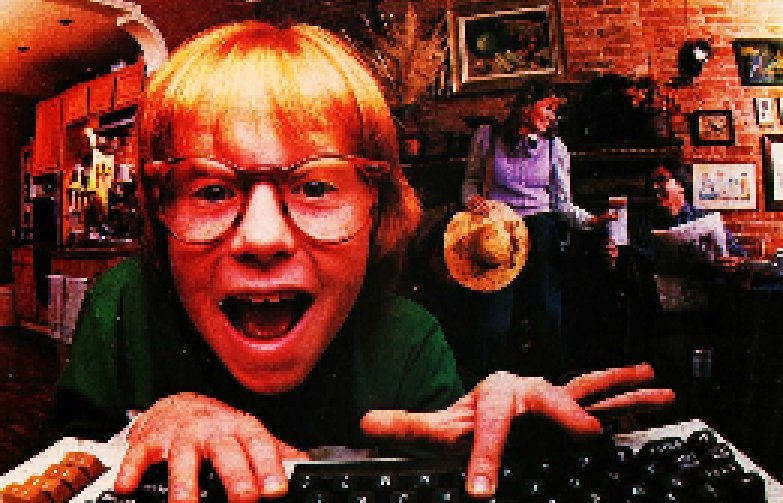
This post is, to some degree, a reflection on the creation of this site, which is admittedly a bit nostalgia-loaded. That’s intentional in terms of my desire to call back to the websites we all knew in the mid-nineties. There’s a notion that the old internet was ‘more fun’. It certainly felt more diverse in terms of content. If we’re being honest with ourselves, it also sucked in ways that we’ve largely forgotten. Browsers required add-ons for video, audio, and computational features. Things are now baked into HTML and javascript and taken for granted. Do we simply long for that internet because we long for that period of our lives? Possibly, but there's something else going on.
Those sites happened to be built in a time before software developers had begun laying the groundwork for the enshittification of the modern internet. Here I’m talking about obvious things like infinite scrolling, algorithmic feeds, and engagement notifications, of course. These things were bad ideas from the start. But I’m also talking about useful tools which were coopted for malevolent purposes. Things like cookies and javascript, useful for adding a myriad of valuable features to our websites, but also constantly being used to track our every move and push us towards giving up our data so they can sell us stuff.
Anyway, with this site, I aim to leverage the useful tools to provide useful functionality, and eschew the tools of the corporate web that lead down that path. You can read more about this in my ‘manifesto’ linked on the home page, but really it boils down to, “Why not just let a blog be a blog? A picture be a picture? Show content in the order in which it was created. Make it searchable. Lose the 'like' button.” The modern web has some really cool features and ideas, so let’s not throw the baby out with the bath water, but instead let’s implement the cool stuff and ditch the nonsense.

You like this post? Next time you see me, tell me. Or write me an email or text me and tell me you liked it. Maybe even share it with some added reflections of your own. That’s social. Clicking a little thumbs up icon? Not so social. A three word ‘response’? Not so social. That’s all fire and forget. Also, let’s move back to text. There is a time and a place for video. The modern web, it seems, would have us believe that that’s all the time and everywhere and that’s simply not true.
I fully align with a lot of the concepts that the would-be ‘indie web’ attempts to embrace: self-hosted (or, at a minimum, not hosted by the huge corporations), dogfooding, data portability (or at least exportability), smaller, human sized scales. These are noble aims, barriers of entry aside. (Let’s face it, not everyone wants to spend their Saturday afternoon writing .conf files for nginx and figuring out how python virtual environments work. Docker was supposed to, I believe, simplify this for everyone, but that’s a rant for another day.)
When I was thinking about building this site, I had this idea of building an anti-social media site. Mostly because, as a grumpy Gen-X introvert, I’m amused at the notion of such a thing. The more I thought about it, though, the more it occurred to me that what we insist on labeling as “social media” is actually quite anti-social in practice. Using some half-remembered transitive property, I’m pretty sure this means that my anti-social media is actually social. Modern social media does not unite, it divides. I’m not sure whether that’s a feature or a bug, but the cynic in me would lean towards the former.
I want to have access to a blog that’s not owned by corporate interests who are one buy-out away from selling the content I create to whichever AI companies come knocking. I want to be able to post and share a picture without wading through pages of advertisements. I want to be able to decide whether this thing that I wrote is for me, for my friends, or for anyone who wants to read it. I want to create a site where, if my friends like what I wrote, they’ll just tell me. In this way, my anti-social media site really does become social.